| ||||
|
Jet engines, since their appearance in World War II, have literally revolutionized almost all aspects of aviation. Because of improvements in jet engines, aircraft continually fly faster, further, and carry more payload. The reliability and longevity of jet engines has made air travel one of the safest and least expensive means of long-distance transportation. |
Wright's T35 Turboprop Engine, et al. — the Contest to Power the B-52
General Aviation Gas Turbine Engines from Airventure 2010
Photos by Tim Wheat
A Photo Essay by Richard E. Loftis
"These photographs and other related data do
not constitute a technical look at the A-12/SR-71 propulsion system, but a view
of the beauty and complexity of the most outstanding aeronautic system yet
engineered. In most cases each photograph represents a part of the overall
system that was hand made, just as any other piece of art. "
- Richard E. Loftis
Part 1: The
Airframe
(High-Resolution Images in the
Members Section)
Early US Gas Turbines
During World War II, mainstream US aircraft engine manufacturers, such as Allison, Pratt & Whitney and Curtiss-Wright, were not given gas turbine development contracts. The Army Air Corps believed the big engine makers were too busy meeting War production requirements. As a result, other organizations such as Allis-Chalmers, General Electric and Westinghouse took the lead in US gas turbine development. Notably, several US aircraft manufacturers (Lockheed, Northrop) also designed gas turbines of their own during WWII. Of these, only General Electric remains a modern player in the world of aircraft gas turbines. Most of the other efforts have faded into obscurity.
A notable exception is that much of the aircraft gas turbine work of Westinghouse was documented in a 1997 Masters Thesis by Paul D. Lagasse. The AHES is pleased to publish Mr. Lagasse's Thesis, and gratefully acknowledges the assistance of Mr. Lagasse and Mr. Paul Christiansen for their efforts in preparing it for publication here.
The Westinghouse Aviation Gas Turbine Division 1950-1960:
A Case Study in the Role of Failure in Technology and Business
by
Paul D. Lagasse
(655K PDF)
Rolls-Royce
Rolls-Royce Tyne Mk 22 as used on the Transall C160Z
Engine Construction (4.3M PDF)
Engine Controls and Propellers (3.0M PDF)
C160 Fuel System (3.1M PDF)
Rolls Royce Derwent-The Classic Turbo-Jet
Rolls-Royce Jet Engine Education Series (includes animation)
The Whittle/Rover W2B and
Rolls-Royce W2B/23 Welland Turbo-Jets
by Peter Berry
SNECMA ATAR 9C as Used in the Mirage III (1.9M PDF)
Gas Turbine Observations
by Charlie Cravens
Compressor Bleed and Power Extraction
Blades (Fan, Compressor and Turbine)
Images from the Collection of Paolo Pisani
Images from the Collection of Andrzej
Design Analysis of
Messerschmitt Me-262 Jet Fighter
by John Foster, Jr.
Part
1 - The Airframe (6.4MB PDF)
Part 2 - The Powerplant (4.8MB PDF)
Compilation Copyright, J.L. McClellan, 2004
The AEHS is indebted to Mr. J.L. McClellan and to the McGraw-Hill Publishing
Company for their generosity in allowing the publication of these important
insights into the Messerschmitt Me-262. These articles were originally published
in the October and November, 1945 issues, Volume 44, numbers 10 and 11, of
Aviation magazine, published by McGraw- Hill Publishing Company of New York,
NY, USA. They were reconstructed from microfilm by J.L. McClellan. The source is
University Microfilms International, Publication No. 364 (Aviation Week and
Space Technology), Reel No. 21 (January 1945 – December 1945).
The reconstruction process used by Mr. McClellan is highly labor intensive, using much level stretching, followed by hand touch-up of lines and clean up of extraneous marks, gray areas and other image defects.
The microfilm was taken from a tightly bound volume, so that there is some distortion of the images, especially near the binding. It has not been practical to remove or compensate for all the distortions, so none of the illustrations in this reconstruction should be considered reliable sources as to fine details of shape, proportion or spatial relationship. The distortions are, in general, small, and should not detract from a general appreciation of arrangement and relationship. Mr. McClellan has attempted to represent the original layout of the article, but there are some exceptions. Limitations in the compositing tools cause a difference in the text flow relative to the illustrations, compared to the original, so that some changes have been made, to compensate partially for that effect, and the tabular data have been removed from the flow of text and brought together on a single page after the text, partly to make them more accessible, and partly to sidestep problems with page layout. In addition, the original Part II article contained a foldout. Images from that sheet have been added at the end of the article. The images have considerable overlap, so that no information is lost, even though it is not practical to reproduce the original illustrations.
Last Run of the Pratt & Whitney J58
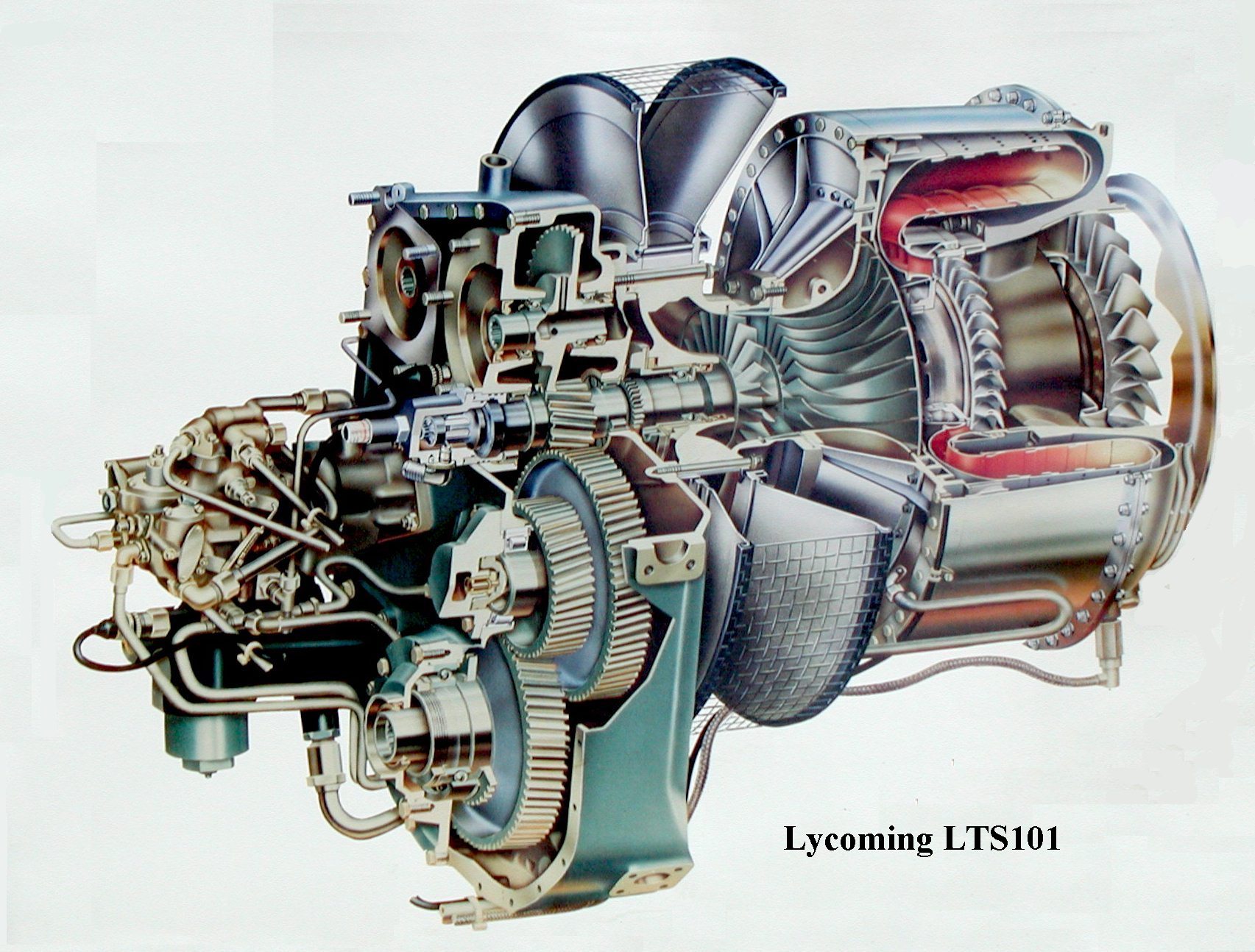
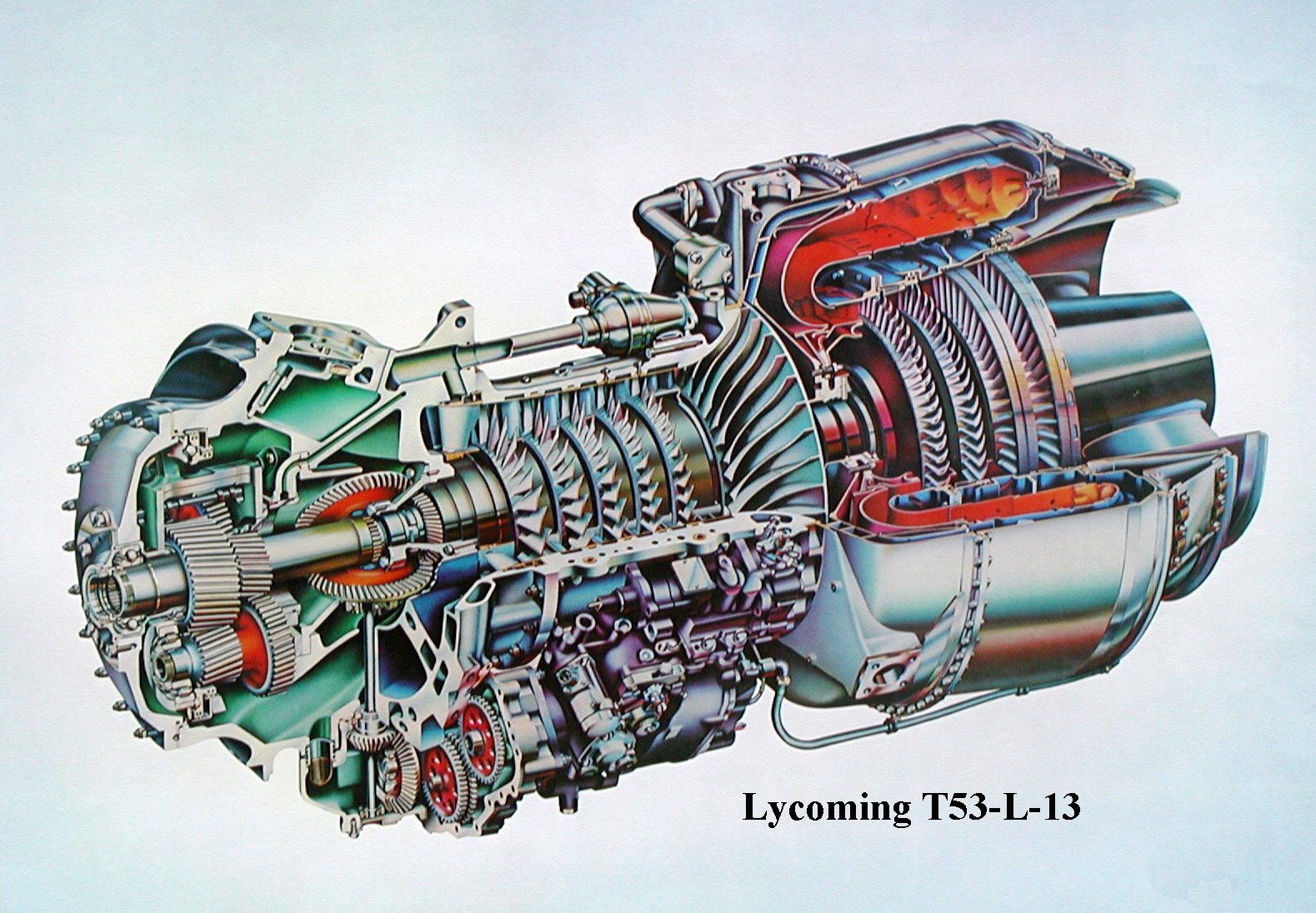
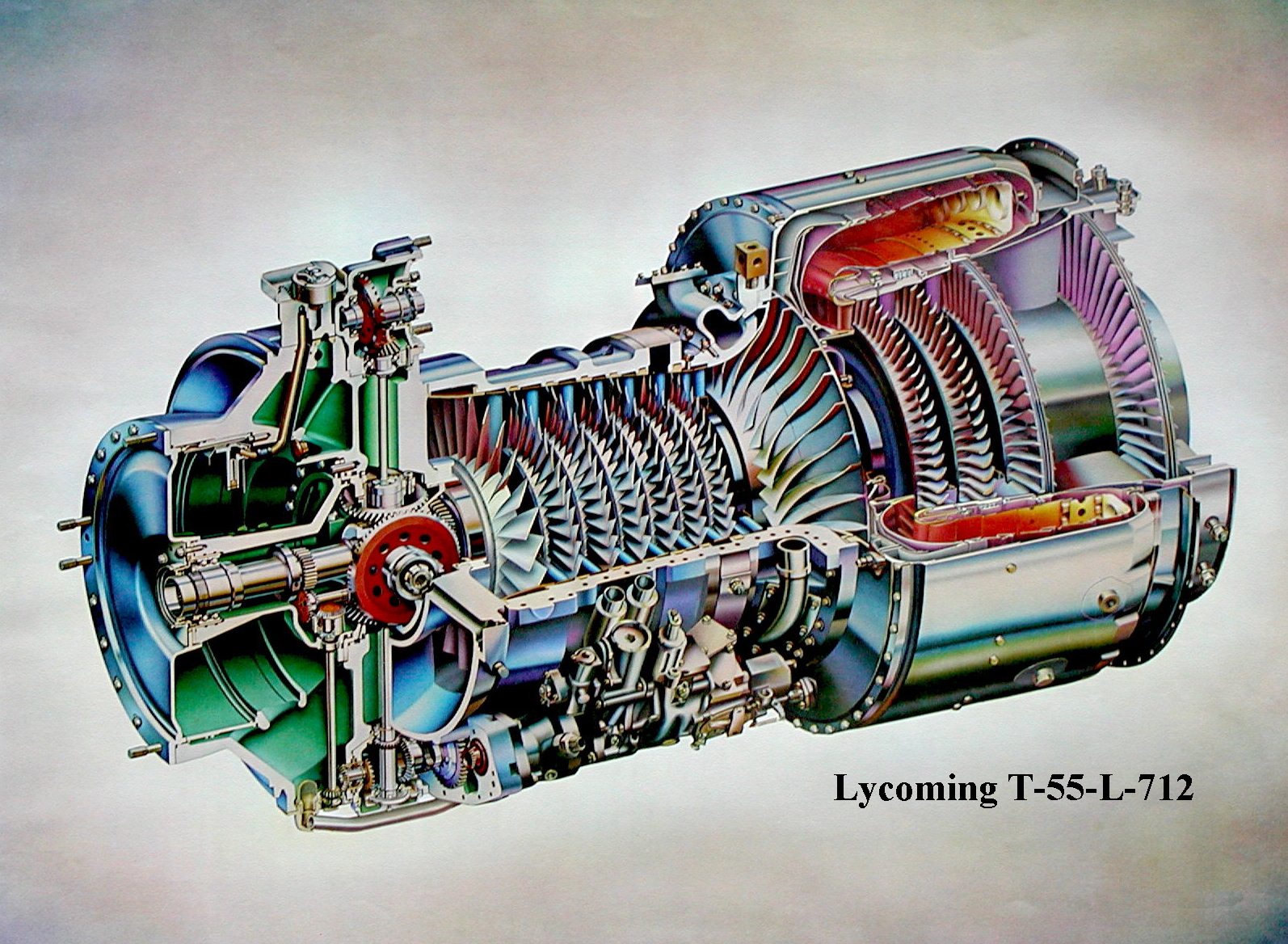
Lycoming Gas Turbines - Textron Lycoming via Ken Collinge
|
|
|
|
|
![]() |
— Includes a beautiful 4-color
schematic of the fuel control — |
![]() |
General Electric F110-GE-110 Images
Please help the AEHS grow by donating material for this section!