Torque Meter
Winter 2008 Issue
|
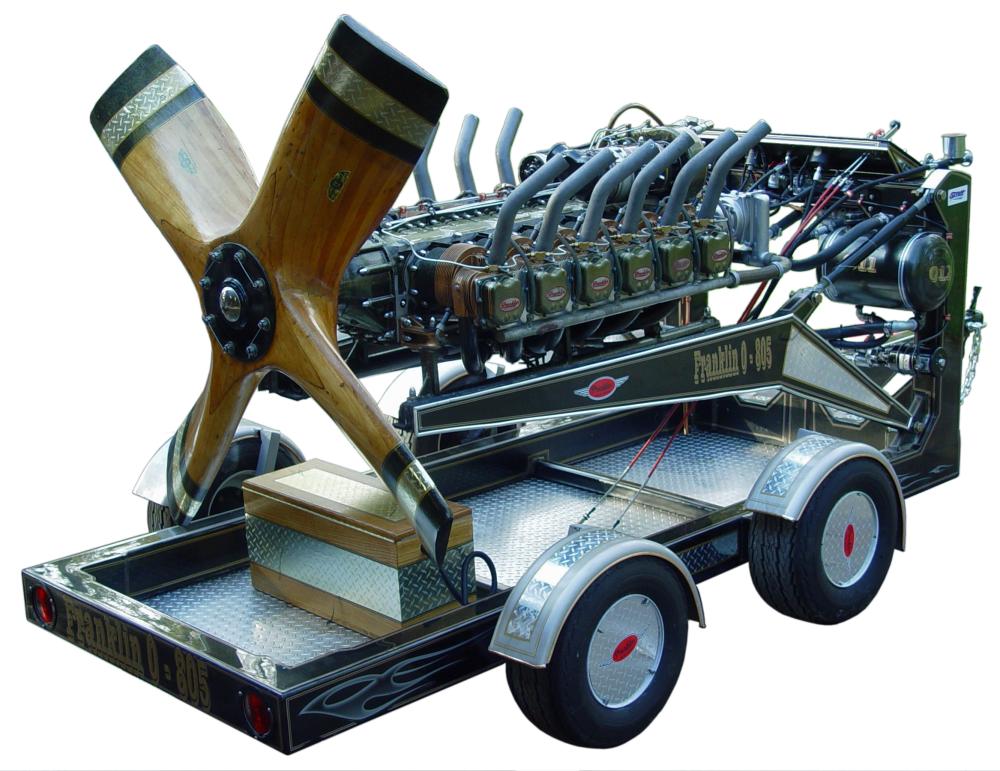 |
Designing and Building a Display Trailer Engine displays are a popular feature of air shows, car shows, hit ‘n miss engine shows and other events where gear heads congregate. But it takes a lot of dedication to get there. Below is a sampling of what it takes to fulfill this noble ambition. Assuming the engine to be displayed is already restored and ready for fitting, the next major task is building a display trailer. Project management skills are essential when building one of these complex systems, in other words schedule the tasks needed to be performed in the correct order. In this way time will not be wasted while, for instance, waiting for a part to be powder coated. First order of business is designing the trailer. Although it could probably be done on the back of the proverbial napkin I strongly recommend doing it on a CAD system. This software is so cheap these days there is really no excuse for not using it and it’ll run on any PC. However, before powering up the PC, it’s a good idea to sketch out some preliminary drawings to give an idea of what you want. |
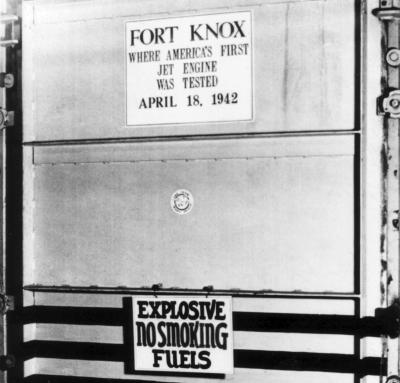 |
Early American Turbojets The story of early American turbojets is frequently oversimplified. Although America was aware of what was going on in jet propulsion, the U.S. Army Air Corps had its reasons for not developing jet fighters in the late 1930s. The Air Corps later changed its mind, but the real tale of U.S. jet propulsion activity is a complex and interesting one. Turbojet engines are an amalgam of two separate technologies — jet propulsion and the gas turbine engine. Frank Whittle’s 1930 patent aimed to wed these two technologies by using a gas turbine engine to provide high energy gas that was accelerated through a nozzle to provide thrust. In order to appreciate the creation of the turbojet era, we need to look into the background of both of these technologies. The squid, the jet ski, and high-pressure water hoses are frequently-used examples of jet propulsion where water is accelerated to create a propulsive force. If we merely say that it is a use of Newton’s Third Law of Motion, folks will point out that an aircraft propeller does the same thing. When talking about aircraft propulsion, let us define jet propulsion as the reactive force from accelerating a high-energy gas through a nozzle. |
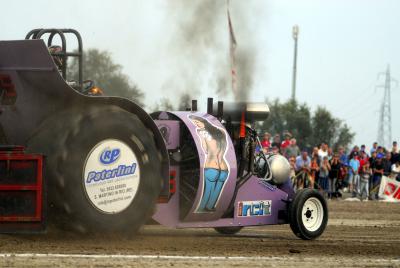 |
Tractor Usage of Warbird Engines in Italy Even in their wildest dreams, engineers designing piston engines for the war effort would have never imagined some of the far-away uses for powerplants meant to propel airplanes. Some V-12s found their way in the armored bellies of tanks. There was even some usage of a radial engine in a racing car, but finding a 3,000 hp radial in a tractor was surely not imaginable. The place where this mechanical craziness happens is in tractor pulling, a motor sport where a tractor, or more accurately, a vehicle limited only in weight, has to pull a load that becomes more and more difficult to pull as the run proceeds. Naturally raw power is of the utmost importance; engine weight too. Tractor owners look for an alternate nitromethane-burning monsters for some balance between power, weight and cost. In this case warbird aviation engines, duly tuned, are a very tempting alternative. |
|
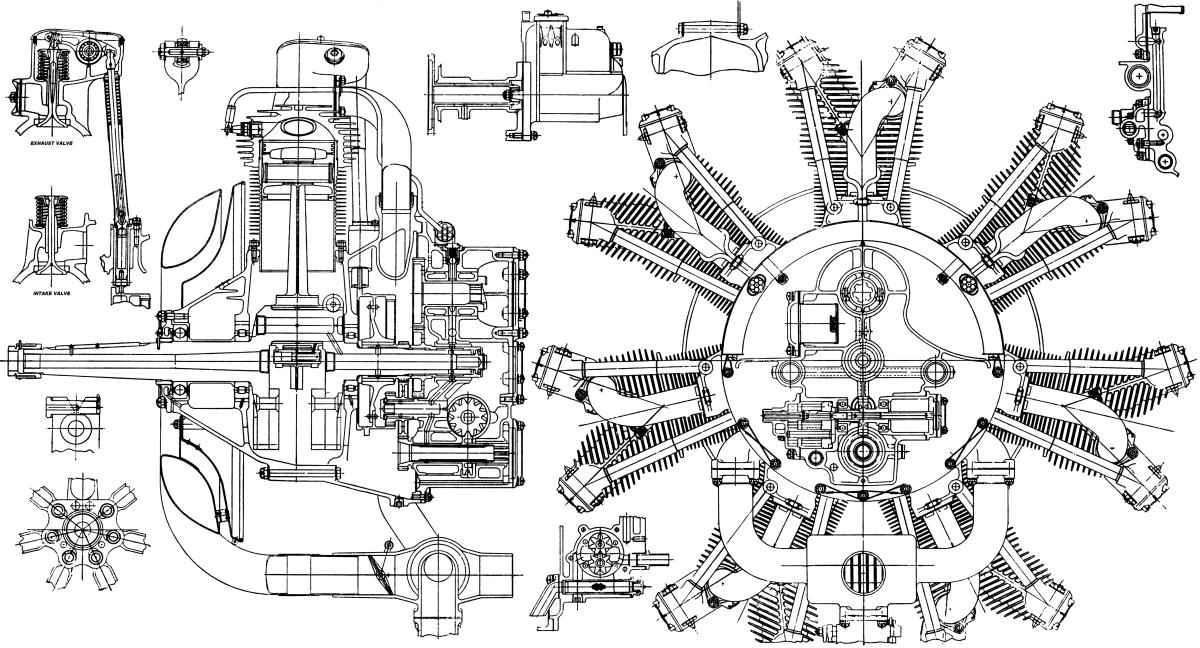
Aero Engine Drawing |
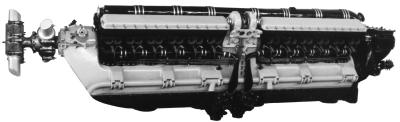 |
The Mighty Fiat AS6 Engine, Part 2: The AS6 Engine in Detail by C. F. Bona We now come to a discussion of the AS (Aviazione Spinto) 6 whose design was the product of the greatest effort of Fiat in the field of racing engines. We have already referred to the ever increasing power requirement imposed by the Schneider Trophy competition. For the 1929 contest, Fiat had aimed to produce an engine of 1,000 hp with a reduction in weight and frontal area that would set new limits. This was achieved with the AS5. The AS6 pushed the boundaries even further. |
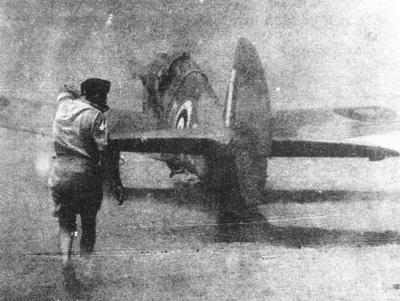 |
The Merlin's Worst Enemy One of the benefits of unearthing old documents in archives is reading contemporary reports on aspects of aviation that no-one has seen fit to publish. This is because the majority of "aviation enthusiasts" only want to read about Spitfires, Mustangs, Lancasters, Flying Fortresses and the aircrew that flew in them. But times they are a changing; those who care about the engines are standing up to be counted, getting organised, and more importantly, counter-balancing the literature scales and writing about aero-engines. This now opens the door to reveal, among other things, the operational record of engines. Present-day commercial gas turbines may stay on-wing for over 30,000 hours without being removed. In the 1940s nothing like this was possible. Even when the Merlin behaved itself you could only expect to get 250 hours on-wing for a fighter and 350 hours, later 450 hours, for a bomber. This first of a two-part article gives an insight into the conditions in which aero-engines had to operate in the North African theatre in 1942-43, and the Herculean efforts that the repair bases had to apply to keep the aircraft flying. |
Send mail to
 with questions or comments about this web site.